
Informatica
Dashboard Redesign
Redesigning the Master data managment dashboard to help IT and data managers turn complex enterprise data into actionable insights.
Redesigning the Master data managment dashboard to help IT and data managers turn complex enterprise data into actionable insights.
Platforms
Cloud native desktop
Timeline
Q4 2022- Q2 2023
Teams
UX/UI, UXR, PM, DEV & Science
My role
In a complex B2B data environment, I co-led experience design for a Master Data Management initiative, working within a team of three designers. I partnered with research to define key use cases and workflows, translated insights into a cohesive product concept, and drove high-fidelity prototyping to bring it to life. I created dashboard UX guidelines for consistent implementation and led cross-functional sessions with product and engineering to support alignment and adoption.
Impact
+50%
In user satisfaction
#1
Most used feature
Global
Design system adoption
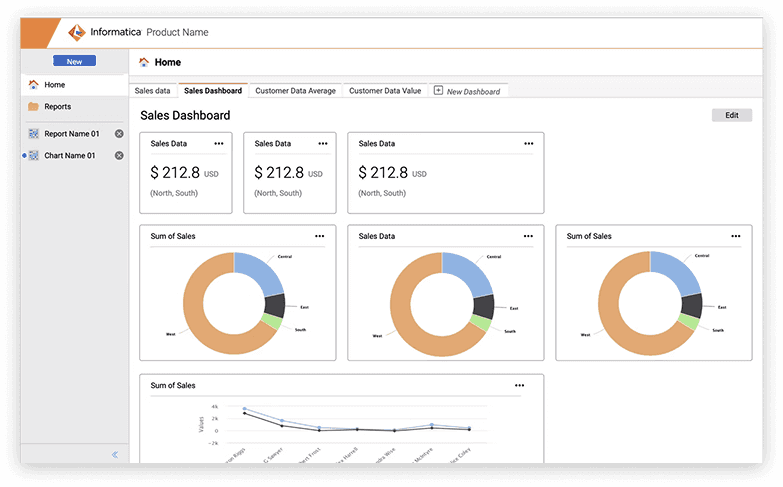
Old solution
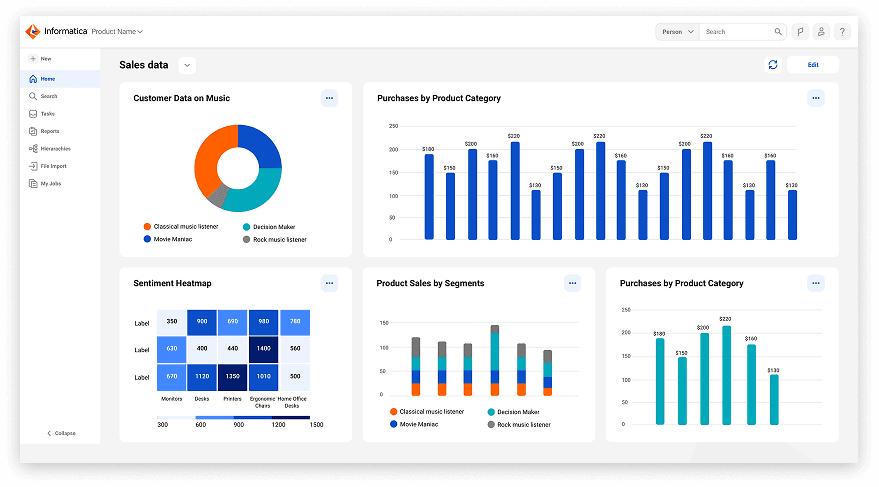
New dashboard solution
The solution
Transitioned from a fixed, tab-driven dashboard to a modular, multi-page system with reusable widgets. This shift improved scalability, reduced visual clutter, and gave users more control over how they structure and interact with their data.
About MDM 360
Users of the MDM (Master data management) platform would typically host large volume of data regarding their business entities over a period of time. The data is organized to users over lists of reports, each individual report has an option for a visual representation that can be shown over the app dashboard.
The problem
User research showed low user satisfaction (5.8/10) with the current dashboard experience. The current solution had limited capabilities compared to exciting solutions in the market: Users could have one non-personalized dashboard that was generated by the system based on a defaulted layout and presented only visual data of the most used reports. Users couldn't create multiple dashboards and manage them in one place, based on their personal business needs.
Goal
Provide users with a dashboard experience that will allow them to consume multiple visual data based on their business needs and make business decisions based on this data.
Grounding the problem with data
27
CX interviews
~11K
User surveys
10
1:1 user interviews
1:1 user interviews
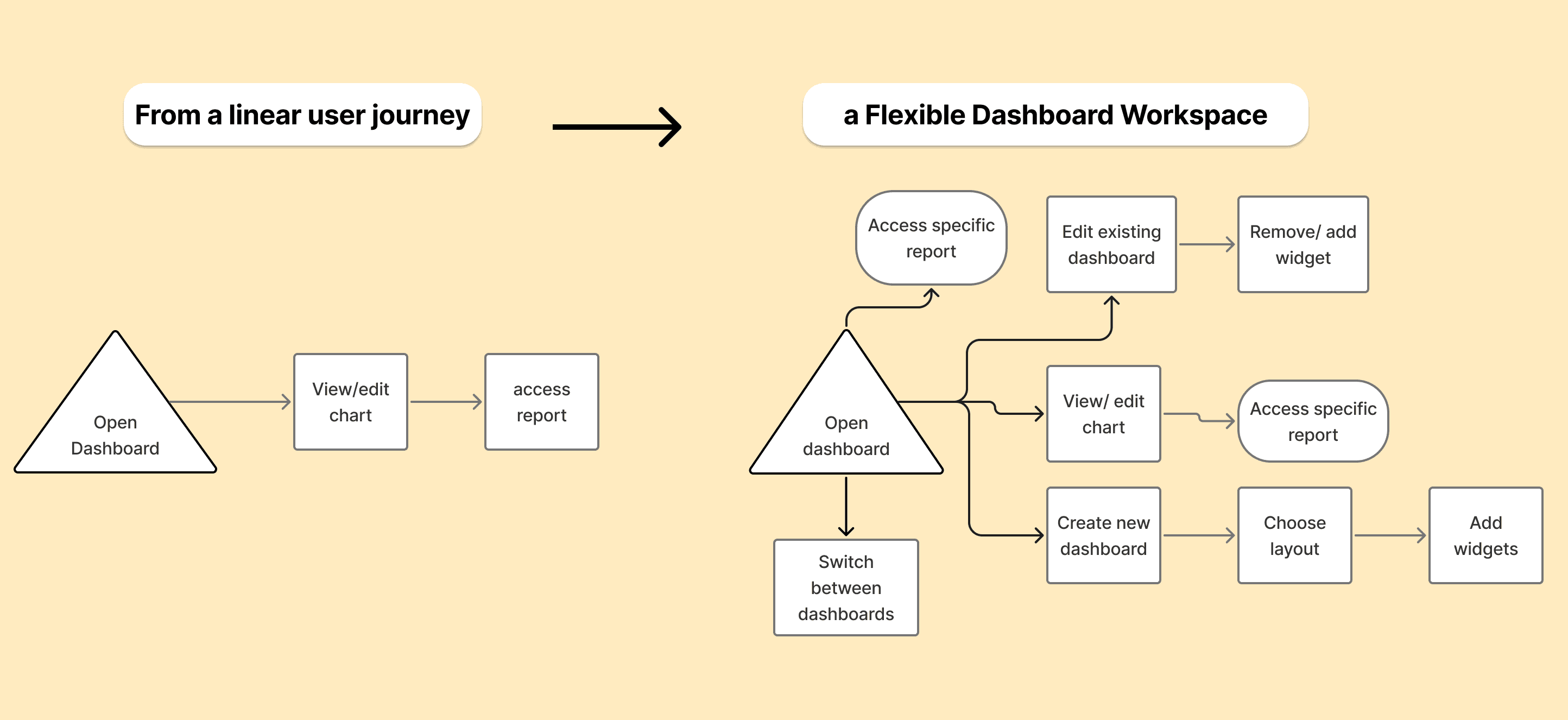
I grounded the design in research, combining customer success interviews, user surveys, and user interviews to understand real workflows and pain points. From these insights, I defined a new product journey and introduced capabilities aligned with core business needs.
I grounded the design in research, combining customer success interviews, user surveys, and user interviews to understand real workflows and pain points. From these insights, I helped define a new product journey and introduced capabilities aligned with core business needs.
Key insights
Users need a way to remove/ edit widgets on the dashboard
Users want to control/ customize the type of visual representation that will be presented for individual report
Users need an environment to create and manage multiple dashboards
Iterative prototyping
I co-led two iterative prototyping cycles, validated through usability testing and cross-functional design walkthroughs.
New user journey
Final design
The final experience focused on clarity, flexibility, and usability- organizing tasks and UI based on users’ mental models and validated behaviors.
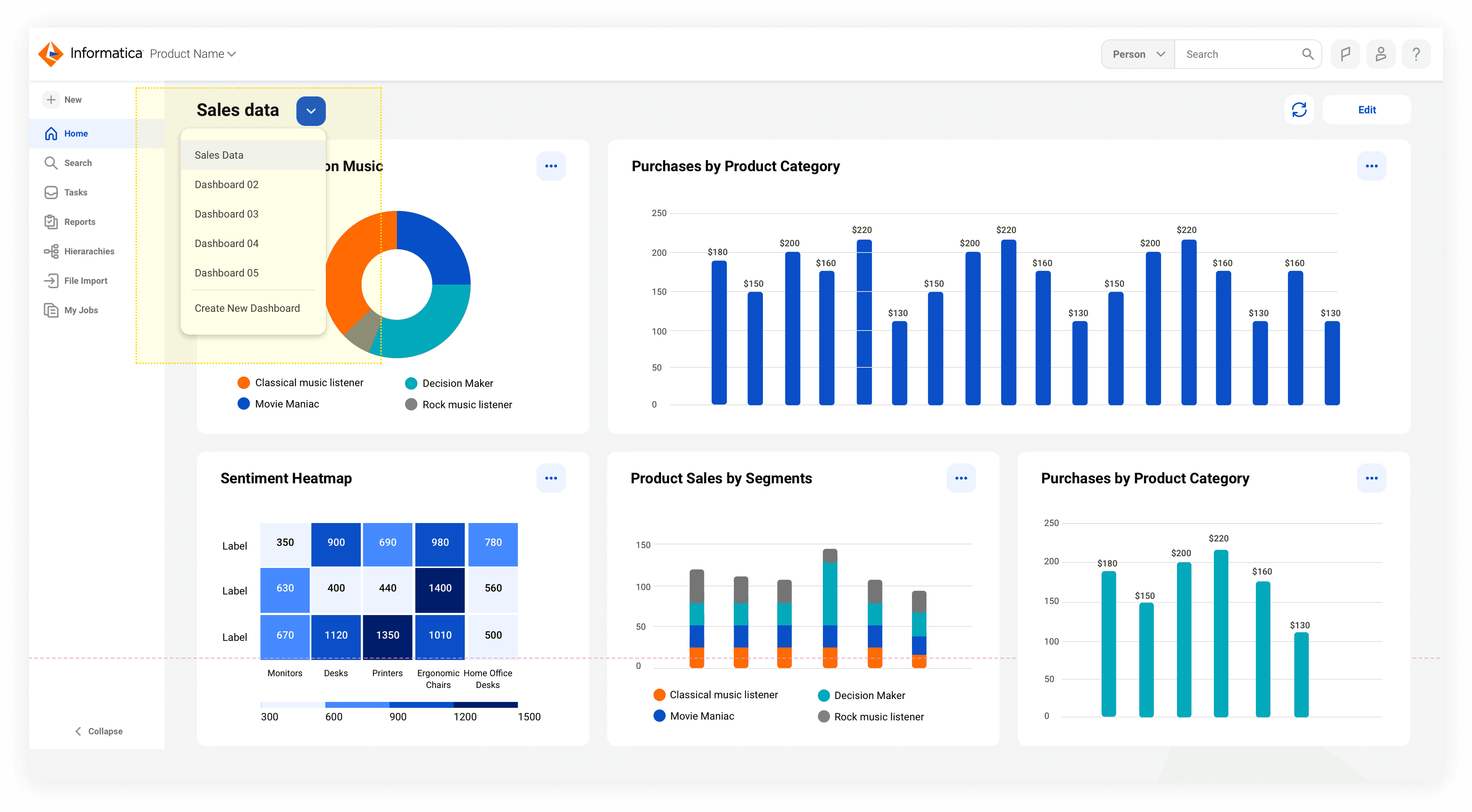
Dashboards view
Ability to create individual widget components for each chart to be displayed on each page of the dashboard
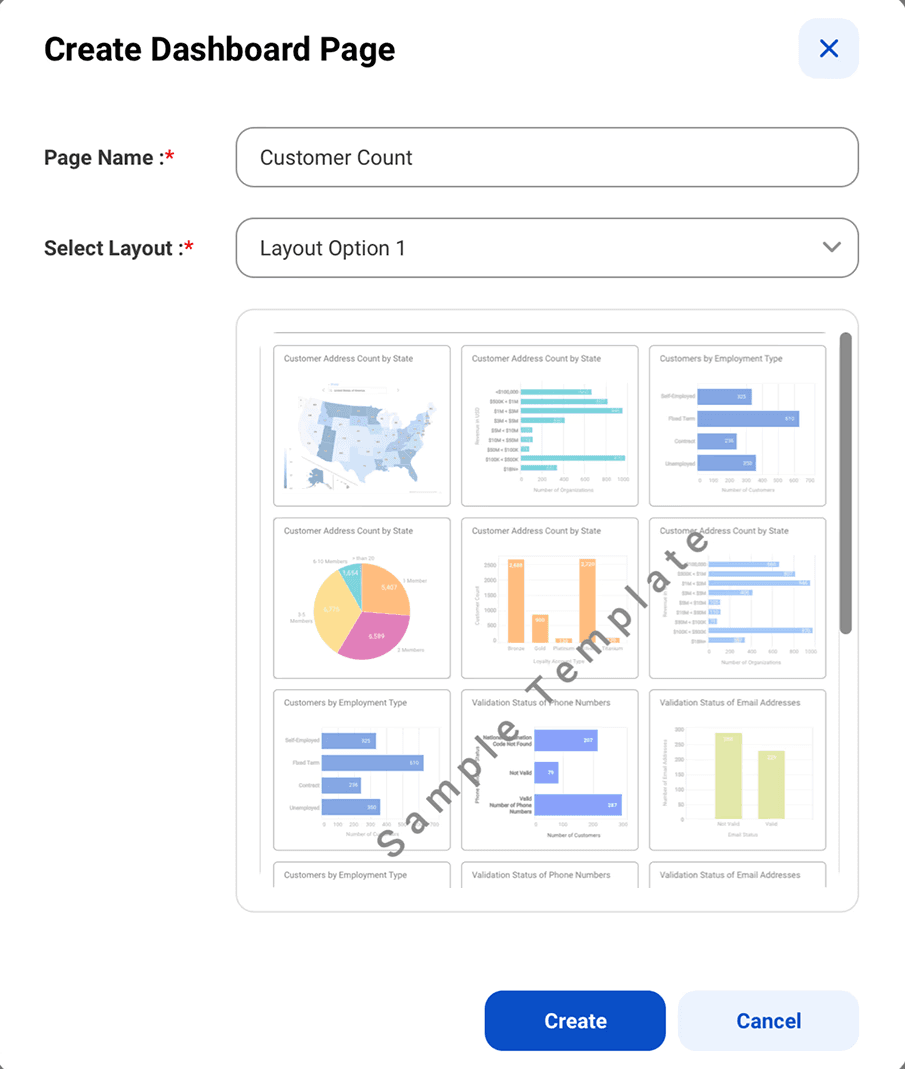
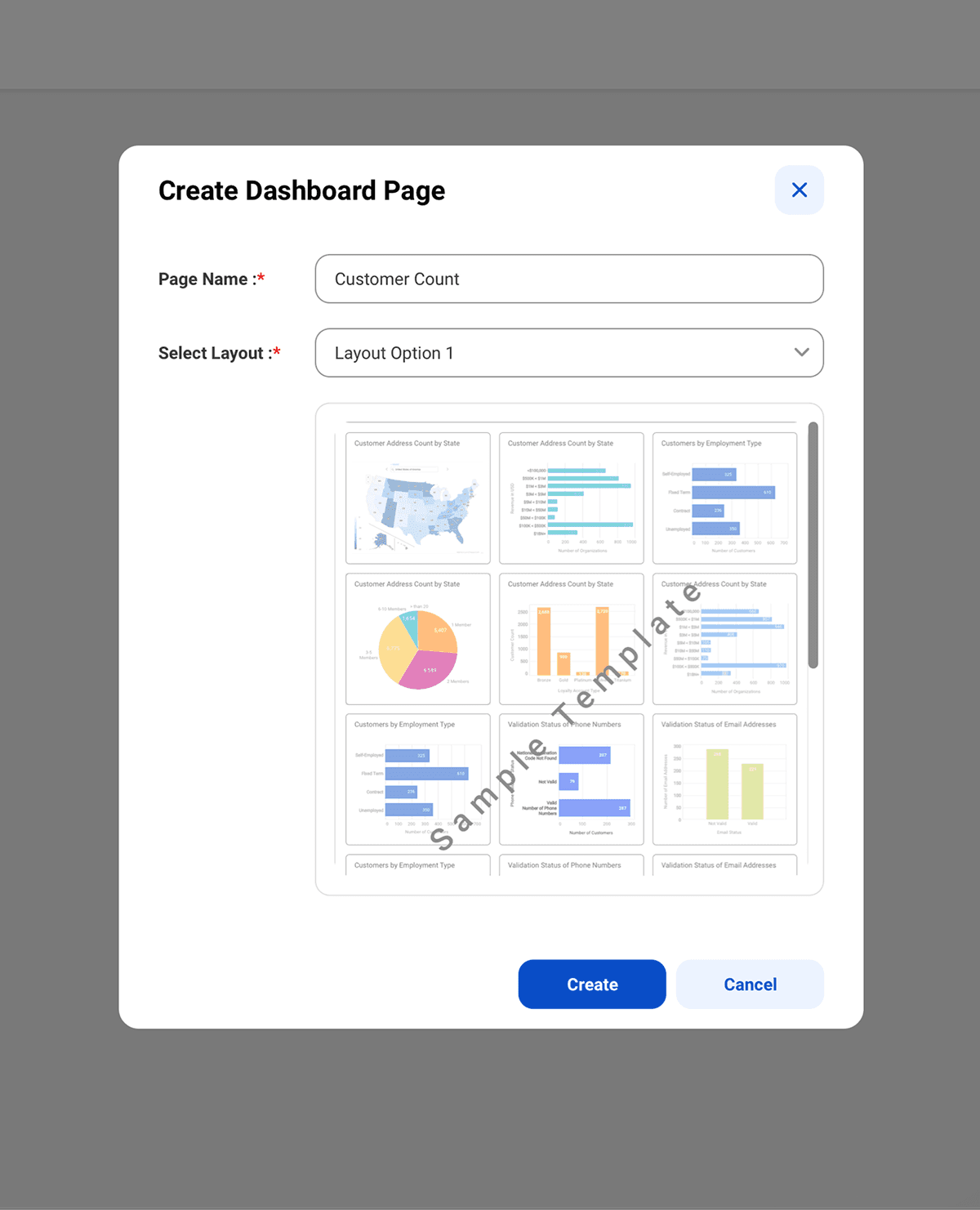
Ability to create multiple dashboard pages and place charts contextually
User can select between pages from a dropdown list, along with the trigger to create a new dashboard page
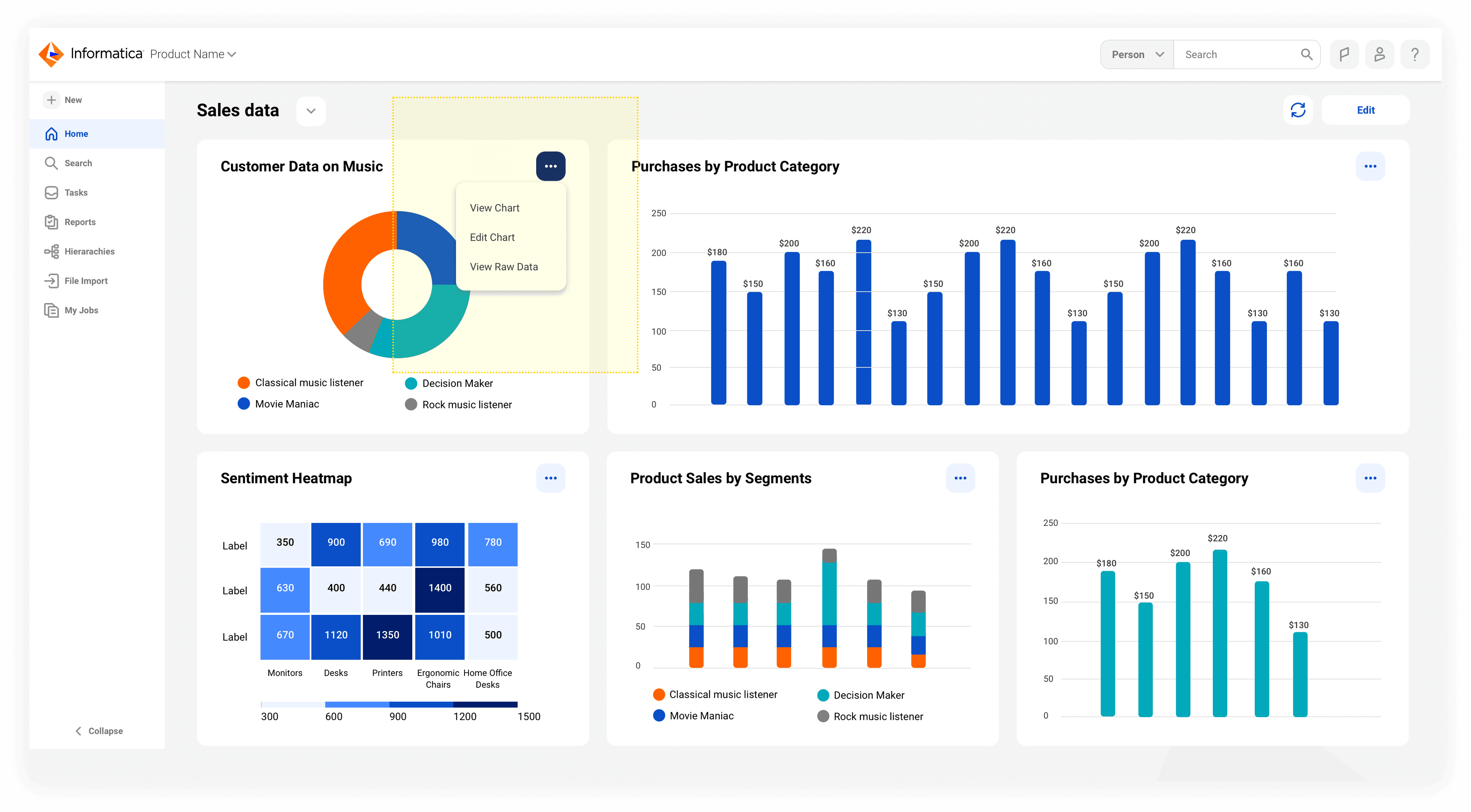
Access chart and report details
The user can access the menu list of the chart component widget to navigate to the report and chart viewing pages. They can't delete a component unless they are in the Dashboard Edit space.
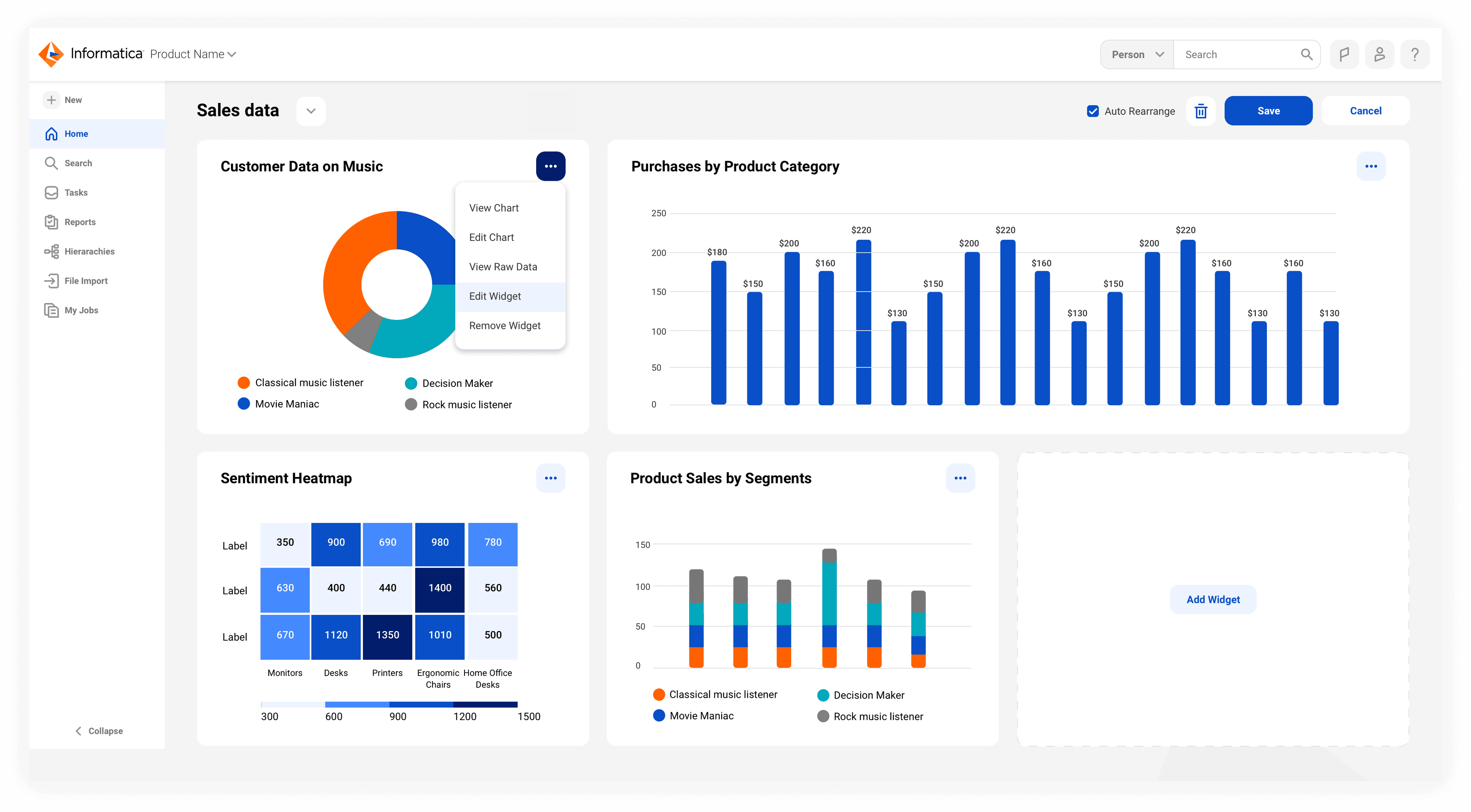
Edit mode
One key improvement was introducing an edit mode for dashboards, reducing accidental actions and increasing user confidence.
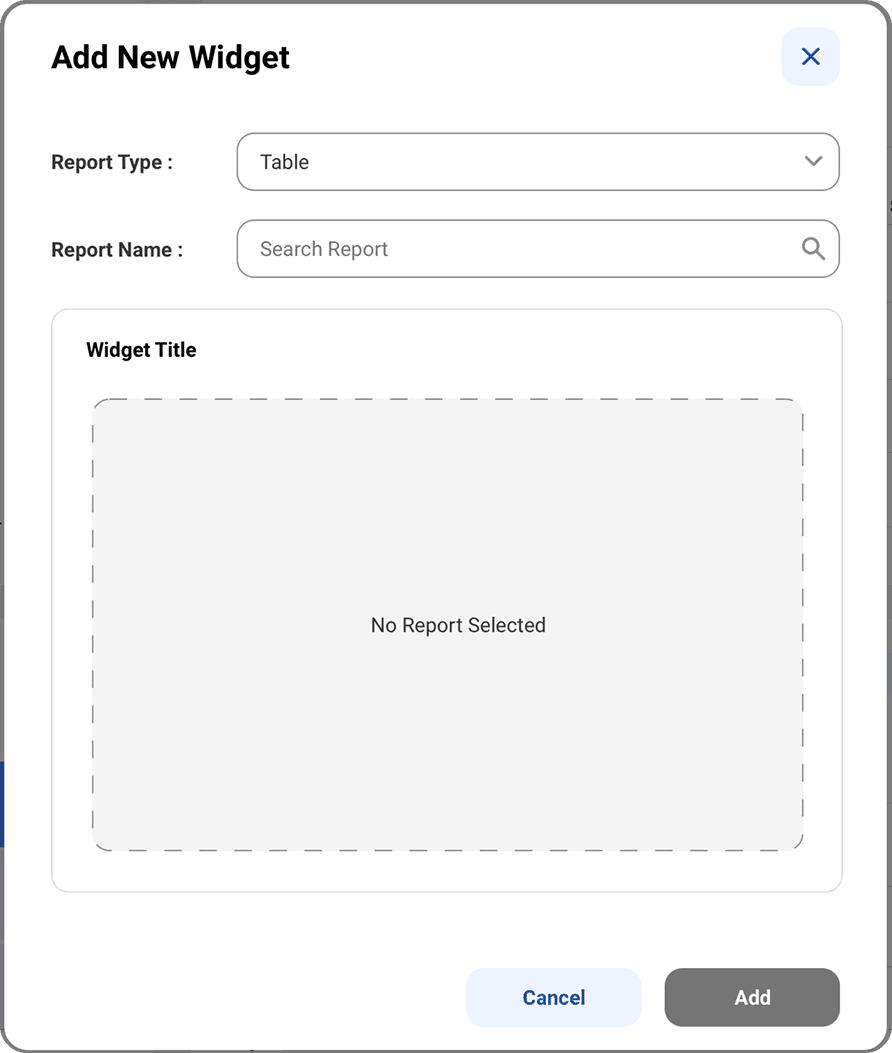
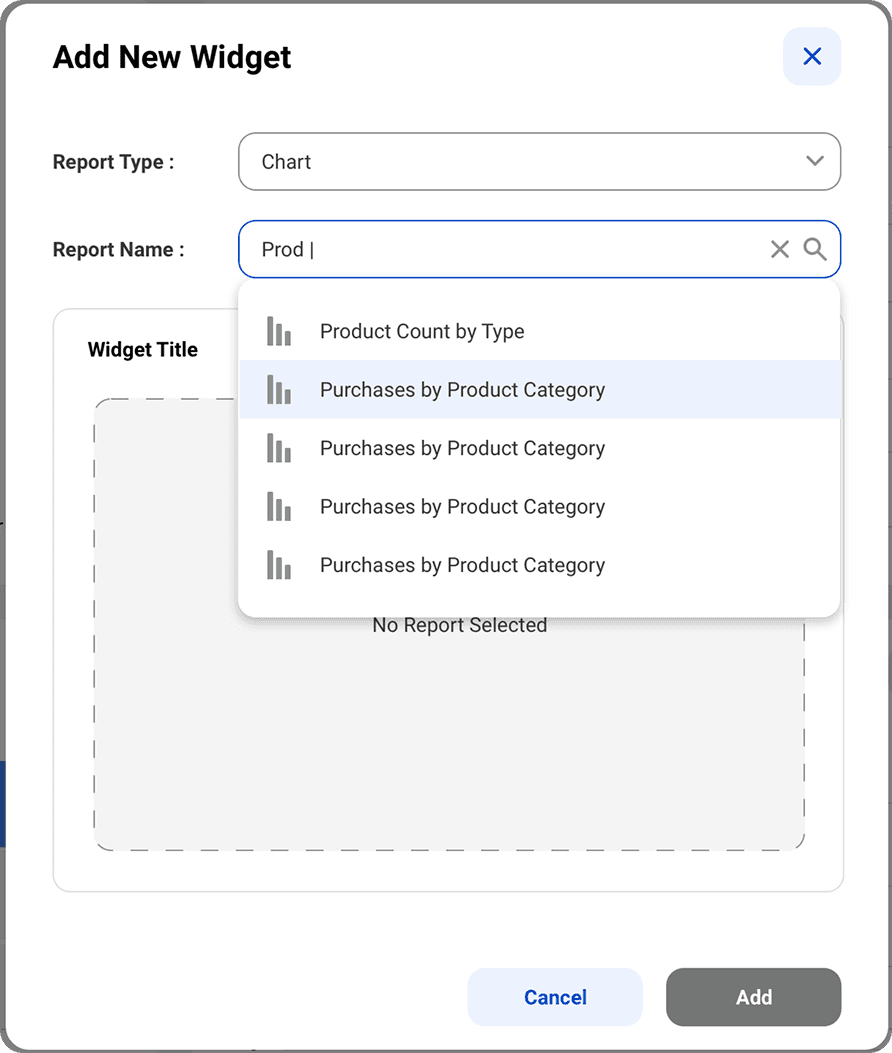
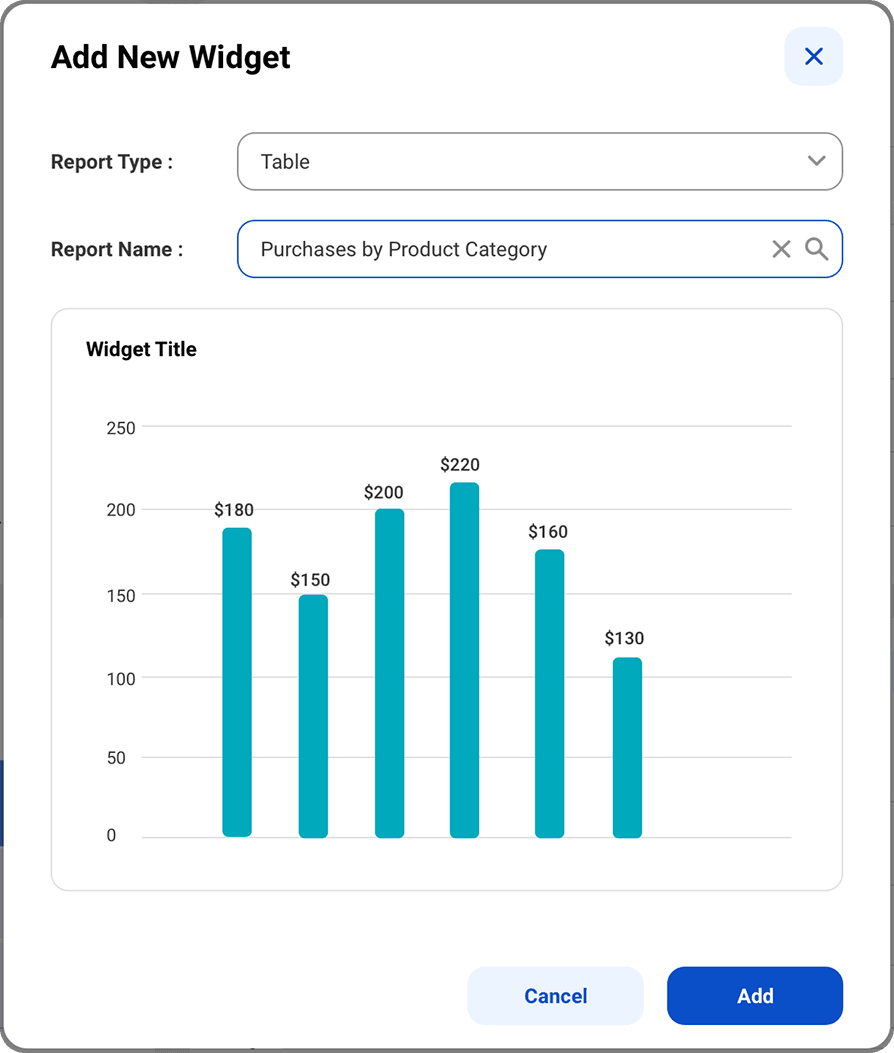
Create a new chart widget component
Create a new chart widget component
Restrictions and challenges
Fixed Layout Hard-Coded to the page
Disadvantage:
Activation and required forms (used to be web only) were consolidated into a single, guided entry point within the app.
Restrictions and Challenges
Fixed Layout Hard-Coded to the page
Disadvantage:
Activation and required forms (used to be web only) were consolidated into a single, guided entry point within the app.
Impact and outcomes
+50% increase in user satisfaction
Score improved from 5.8 → 8.7 within one quarter after launch.
Most-used platform feature
The new dashboard became the most used feature in Q2 2023 based on click rate.
Company-wide design impact
Visual improvements were added to the design system and adopted across multiple products.
Scalable UX foundation
Created dashboard UX guidelines to support consistent implementation across design and engineering teams.
The solution
Transitioned from a fixed, tab-driven dashboard to a modular, multi-page system with reusable widgets. This shift improved scalability, reduced visual clutter, and gave users more control over how they structure and interact with their data.
Old solution
New dashboard solution
About MDM 360
Users of the MDM (Master data management) platform would typically host large volume of data regarding their business entities over a period of time. The data is organized to users over lists of reports, each individual report has an option for a visual representation that can be shown over the app dashboard.
The problem
User research showed low user satisfaction (5.8/10) with the current dashboard experience. The current solution had limited capabilities compared to exciting solutions in the market: Users could have one non-personalized dashboard that was generated by the system based on a defaulted layout and presented only visual data of the most used reports. Users couldn't create multiple dashboards and manage them in one place, based on their personal business needs.
Goal
Provide users with a dashboard experience that will allow them to consume multiple visual data based on their business needs and make business decisions based on this data.
Grounding the problem with data
27
CX interviews
~11K
User surveys
10
1:1 user interviews
Impact
My role
In a complex B2B data environment, I co-led experience design for a Master Data Management initiative, working within a team of three designers. I partnered with research to define key use cases and workflows, translated insights into a cohesive product concept, and drove high-fidelity prototyping to bring it to life. I created dashboard UX guidelines for consistent implementation and led cross-functional sessions with product and engineering to support alignment and adoption.
Platforms
Cloud native desktop
Timeline
Q4 2022- Q2 2023
Teams
UX/UI, UXR, PM, DEV & Science
+50%
User satisfaction
#1
Most used feature
Global
Design system adoption
Impact & outcomes
+50% increase in user satisfaction (5.8 → 8.7)
#1 most-used platform feature in Q2 2023
Design system adoption across company products
Dashboard UX guidelines created for cross-team implementation
Key insights
Users need a way to remove/ edit widgets on the dashboard
Users want to control/ customize the type of visual representation that will be presented for individual report
Users need an environment to create and manage multiple dashboards
Iterative prototyping
I co-led two iterative prototyping cycles, validated through usability testing and cross-functional design walkthroughs.
Final design
The final experience focused on clarity, flexibility, and usability- organizing tasks and UI based on users’ mental models and validated behaviors.
Dashboards view
Access chart and report details
Create a new chart widget component
Edit mode
New user journey
Crafted with creativity, late-night iterations, Ctrl+Z reflexes, and a carefully curated playlist.
© Chen Segal 2025
© Chen Segal 2025
Crafted with creativity, late-night iterations, Ctrl+Z reflexes, and a carefully curated playlist.
© Chen Segal 2025